Is Digital Marketing a Good Career in 2026? An Honest Consultant’s View

By Raeess | Addox Digital
Digital marketing is often promoted as an easy career.
Learn a few tools, create social media posts, complete a certificate and start earning.
After working in digital marketing for more than eight years through Addox Digital, I see the industry differently.
Digital marketing is a strong career choice in 2026. But it is not a shortcut to quick income.
The real opportunity is for people who can understand customers, create the right message, analyse campaign performance and connect marketing with actual business results.
I have worked with businesses in education, FMCG branding, architecture and consultancy. In many of these projects, the main problem was not a lack of social media content.
The real problems were unclear targeting, weak offers, poor landing pages, missing tracking and slow sales follow-up.
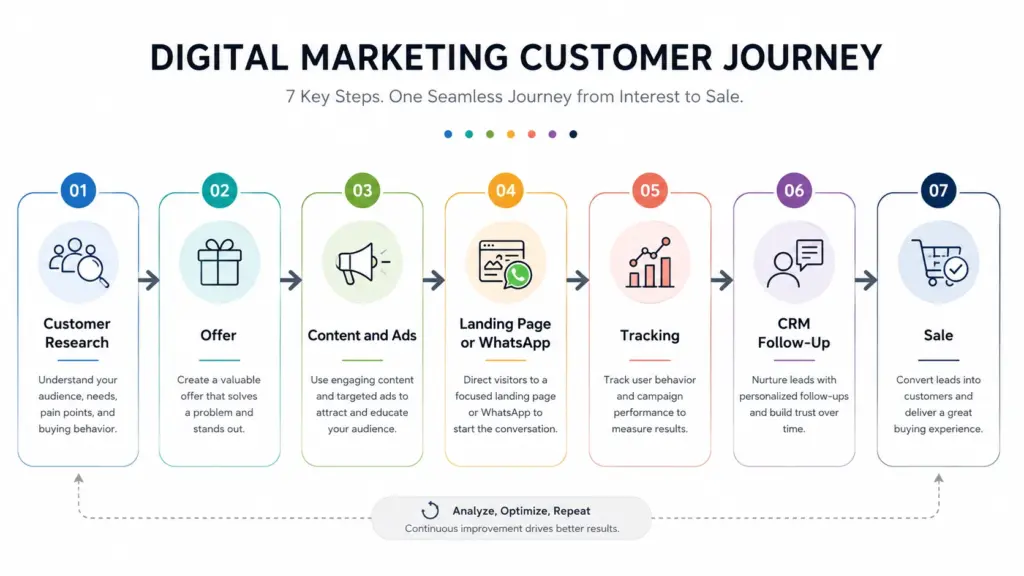
This is why businesses need more than social media executives. They need digital marketers who can understand the full customer journey.
What Does a Digital Marketer Actually Do?
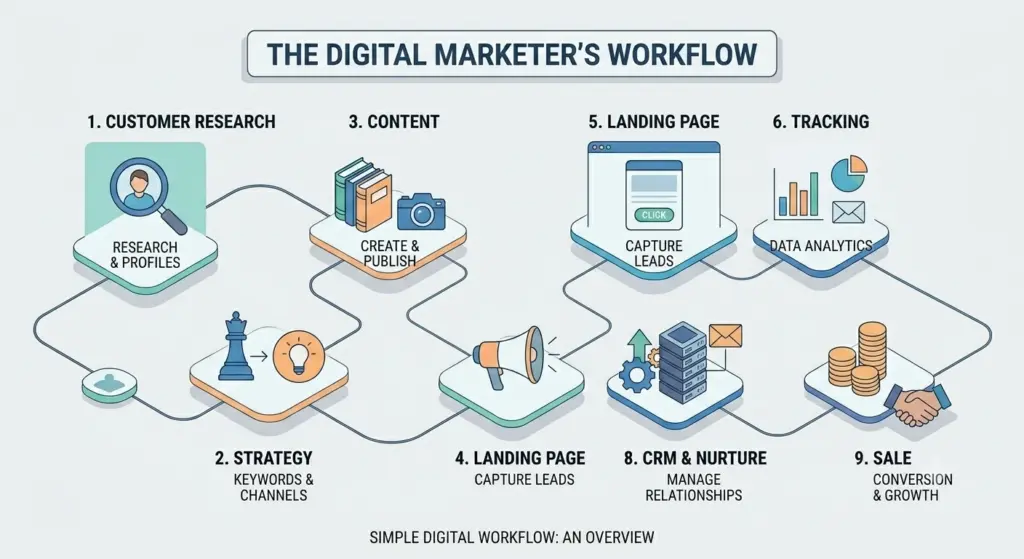
A digital marketer helps a business attract the right people and convert them into customers.
This may involve:
- Customer research
- Content strategy
- Search engine optimisation
- Social media
- Meta and Google Ads
- Websites and landing pages
- Analytics
- WhatsApp and email marketing
- CRM and sales follow-up
These are not separate activities.
Customer research helps us understand the audience. That research shapes the offer and advertising message. Ads bring people to a landing page or WhatsApp. Tracking shows where the enquiry came from. Follow-up moves that enquiry towards a sale.
A digital marketer should understand how all these stages work together.
Is Digital Marketing a Good Career in 2026?
Yes, digital marketing is a good career for students who are interested in creativity, technology, business and problem-solving.
Almost every industry now needs digital marketing.
Educational institutions need student enquiries. Architects need project consultations. Retail brands need sales. Consultants need qualified leads. Local businesses need visibility on Google and social media.
This creates career opportunities in:
- Digital marketing agencies
- Startups
- E-commerce companies
- In-house marketing teams
- Media companies
- Educational institutions
- Technology companies
- Freelancing and consulting
However, students should not try to become experts in everything immediately.
They should understand the full system and then specialise in one area.
Why Social Media Posting Alone Is Not Enough
Social media posting can keep a brand active.
But posting alone does not guarantee enquiries or sales.
A business may receive likes, views and engagement without generating any serious customer action.
Every piece of content should have a clear purpose. It may create awareness, build trust, answer a question, present proof or generate an enquiry.
A proper digital marketing strategy should include:
- Business goal
- Target customer
- Market position
- Offer
- Content plan
- Lead-generation channel
- Advertising
- Landing page
- Tracking
- Follow-up
- Sales conversion
Digital marketing is not simply deciding what to post.
It is planning how to find the customer, earn attention, build trust and move the customer towards a purchase.
The Problem with Cheap Leads
One of the biggest mistakes businesses make is judging campaigns only by cost per lead.
A cheap lead is not always a good lead.
A campaign may generate 100 leads at ₹100 each. But if only two people purchase, the cost per sale is ₹5,000.
Another campaign may generate 40 leads at ₹250 each. If eight people purchase, the cost per sale is only ₹1,250.
The second campaign has a higher lead cost but produces a better business result.
This is why marketers should look beyond lead quantity.
Important metrics include:
- Qualified enquiries
- Cost per qualified lead
- Contact rate
- Appointment rate
- Lead-to-sale conversion
- Customer acquisition cost
- Revenue
- Return on ad spend
The goal of a campaign should not be the cheapest lead.
The goal should be profitable customer acquisition.
Why Lead Quality Becomes Poor
Low-quality enquiries can come from several problems:
- Wrong audience
- Misleading advertisement
- Weak offer
- Poor form questions
- Accidental submissions
- Location mismatch
- Major budget mismatch
- Customers with no immediate requirement
A form that collects only a name and phone number may generate more leads, but many of them may not be useful.
Depending on the business, the form can also ask about location, required service, budget, timeline or consultation preference.
The form should remain simple, but it should collect enough information to help the sales team understand the lead.
Sales Follow-Up Is Part of Marketing
Generating a lead does not complete the marketing process.
The final result depends heavily on how the business handles the enquiry.
At Addox Digital, we have seen campaigns generate relevant enquiries while the business still struggles with sales.
The reasons are often simple:
- Leads are contacted late
- Missed calls are not followed up
- One WhatsApp message is sent and forgotten
- Interested leads are not contacted again
- Sales status is not updated
- Lost-lead reasons are not recorded
In the Kerala market, many customers prefer WhatsApp communication.
When a customer submits an enquiry, their interest is usually highest at that moment. A quick acknowledgement and timely follow-up can improve the chance of conversion.
Ideally, the first meaningful response should happen within around 15 minutes.
A basic follow-up process can include:
- Instant WhatsApp acknowledgement
- First call attempt
- A message when the call is unanswered
- Lead-status update
- Next follow-up date
- Relevant information or proof
- Multiple follow-up attempts
- Closed-won or closed-lost status
Ads create the opportunity. Follow-up converts that opportunity into revenue.
Why CRM Skills Are Valuable
Leads may come from websites, WhatsApp, Meta Ads, Google Ads and phone calls.
When all these enquiries remain in separate phones and spreadsheets, businesses lose visibility.
A CRM helps organise leads through stages such as:
New Lead → Contacted → Interested → Consultation → Follow-Up → Closed Won or Closed Lost
This allows both marketing and sales teams to understand what happens after a lead is generated.
It also helps answer important questions:
- Which campaign generated serious buyers?
- Why were leads lost?
- Which audience converted?
- Which advertisement created sales?
- How many leads reached the consultation stage?
Students who understand advertising, CRM and follow-up systems can become more valuable than those who only know how to run ads.
How AI Is Changing Digital Marketing
AI can help marketers work faster.
It can support:
- Content ideas
- First drafts
- Advertisement variations
- Keyword research
- Data summaries
- Customer-response analysis
- Basic automation
- Reporting
But AI does not automatically understand a business, its customer or its market.
A marketer still needs to decide:
- Who the real customer is
- What offer should be promoted
- Why a campaign is failing
- Whether the AI output is accurate
- Which performance metric matters
- How marketing should connect with sales
AI will reduce repetitive work. It will not remove the need for strategy, judgment and customer understanding.
Students should learn to use AI as an assistant, not as a replacement for thinking.
Best Digital Marketing Career Options
Students can choose a specialisation based on their strengths.
SEO Specialist
Suitable for students who enjoy research, websites and long-term growth.
Performance Marketer
Suitable for students who enjoy numbers, testing, paid advertising and measurable results.
Content Strategist
Suitable for students who enjoy writing, research and communication.
Social Media Strategist
Suitable for creative students who understand content, audience behaviour and brand communication.
Marketing Analyst
Suitable for students who enjoy data, reports and identifying performance problems.
CRM and Automation Specialist
Suitable for process-oriented students interested in lead management, WhatsApp, email and customer journeys.
Conversion Optimisation Specialist
Suitable for students interested in psychology, landing pages, user behaviour and testing.
What Agencies Expect from Freshers
Agencies do not expect freshers to know everything.
But they look for candidates who have prepared themselves through practical work.
Important qualities include:
- Clear communication
- Customer understanding
- Copywriting basics
- SEO and advertising awareness
- Spreadsheet knowledge
- Reporting ability
- Responsible use of AI
- A practical portfolio
- Willingness to learn
- Deadline discipline
A common problem is that students know definitions but cannot apply them.
They may know what SEO means but cannot find keywords. They may know the term buyer persona but cannot describe a real customer. They may understand conversion rate but cannot explain why a landing page is failing.
Employers value candidates who can think through a problem.
Do You Need a Degree?
A specific degree is not compulsory for every digital marketing role.
Students from commerce, science, arts, engineering and other backgrounds can learn the field.
Digital marketing can also be started after Class 12 or during graduation.
However, some companies may still require a degree as part of their hiring policy.
A degree can help you qualify for an opportunity. Practical skills help you perform in that opportunity.
The strongest profile combines education, real projects, communication and a good portfolio.
How to Start a Digital Marketing Career
Learn Marketing Fundamentals
Understand customers, offers, funnels, trust, conversion and retention before depending on tools.
Understand the Main Channels
Learn the basics of SEO, content, social media, paid advertising, websites, analytics, CRM and automation.
Choose a Specialisation
Select one area based on your strengths and interests.
Work on Real Projects
Use a personal website, local business, college event, internship or volunteer project to practise.
Build a Portfolio
Explain the problem, your strategy, the work completed, tools used and the final result.
Learn Reporting
Do not only show numbers. Explain what happened and what action should be taken next.
Apply for Practical Roles
Choose internships and entry-level jobs that offer real campaign exposure, feedback and mentorship.
Common Mistakes Students Should Avoid
Students should avoid:
- Learning only social media posting
- Depending only on certificates
- Trying to master every skill at once
- Ignoring analytics
- Learning tools without business context
- Expecting immediate freelance income
- Using AI without checking the output
- Building no practical portfolio
A certificate can support your profile. It cannot replace real ability.
My Final View
Digital marketing is a strong career option in 2026.
But students should enter the industry with realistic expectations.
It is not only about social media, advertisements or content creation. It is about understanding customers and helping businesses achieve measurable growth.
The most valuable professionals will be those who can connect customer research, content, ads, landing pages, tracking, CRM and sales follow-up.
Learn the fundamentals. Build real projects. Develop one strong specialisation. Use AI wisely. Understand both marketing and sales.
That is how students can build a long-term career in digital marketing.
Start Learning Digital Marketing Practically
Students need more than recorded lessons and certificates to become job-ready.
They need live projects, mentor feedback, internship exposure, portfolio support and an understanding of how marketing connects with sales.
DEXTA Academy offers an AI-integrated digital marketing and digital sales programme designed around practical learning.
The four-month offline programme includes classroom training, internship exposure, live projects, one-to-one guidance, portfolio development, interview preparation and placement assistance.
Students can visit the DEXTA Academy website to explore the programme and upcoming batch details.
Frequently Asked Questions
Is digital marketing a good career in 2026?
Yes. It offers career opportunities in SEO, advertising, content, analytics, social media, CRM and automation.
Is digital marketing only social media?
No. Social media is only one part. Digital marketing also includes customer research, websites, ads, SEO, analytics, CRM and sales follow-up.
Can I learn digital marketing after Class 12?
Yes. Students can start after Class 12 or during graduation.
Is a degree compulsory?
Not for every role. However, some employers may require graduation. Practical skills and a strong portfolio are also important.
Will AI replace digital marketers?
AI will automate repetitive tasks, but businesses will still need people for strategy, customer understanding and decision-making.
Can a certificate get me a job?
A certificate can support your application. Employers will also evaluate your practical skills, communication and portfolio.
Which skill should a beginner learn first?
Begin with customer journeys, content, SEO, paid advertising and analytics. Then choose one specialisation.
Can digital marketing be learned in four months?
A structured four-month programme can build strong fundamentals and practical exposure. Becoming highly skilled requires continued practice.